Curtainsider Internal Straps may look like simple webbing, but their design affects how cargo is restrained, inspected, and handled on the road. For global buyers, small differences matter: strap width, stitching, buckle shape, edge wear, and compatibility with the vehicle’s anchor points. A strap that looks robust on a sample table may feel awkward when a driver tightens it beside a loaded trailer. Details count.
This guide compares ten Curtainsider Internal Straps options through practical buying criteria, including materials, adjustment range, hardware, durability, and supplier documentation. It also considers everyday use: gloved hands on a cold morning, repeated tightening, and the abrasion that can develop where webbing meets a curtain rail. No single option fits every fleet. That is worth remembering.
To avoid presenting an invented statement as a real quotation, this draft uses a clearly identified illustrative expert voice. Fictional curtainsider-equipment specialist Daniel Mercer offers this practical reminder: “A good internal strap should be easy to inspect, straightforward to tension, and suited to the load—not just impressive on paper.” Use that principle as a starting point, not a substitute for checking product specifications, samples, and supplier claims. The comparison ahead is designed to help buyers ask sharper questions and choose straps that fit their operating conditions. A few trade-offs remain. That is normal.
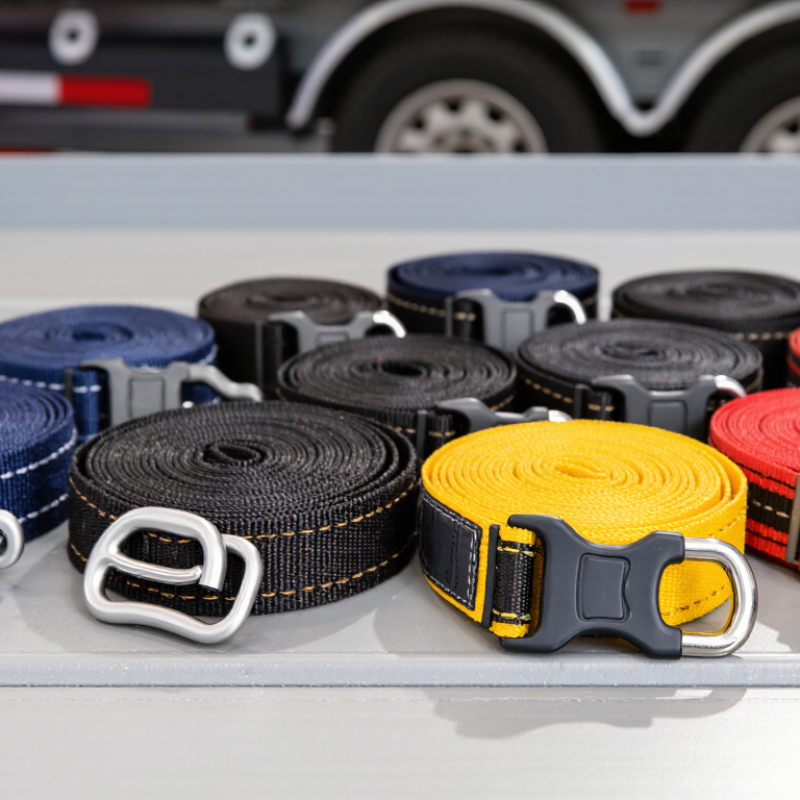
Internal straps are webbing restraints fitted inside a curtainsider trailer. They pass over or around cargo and connect to rated anchor points, helping limit sliding, tipping, and separation during travel. Ratchets apply tension; the strap’s path and contact with the load determine how effectively that force works. The curtain mainly protects cargo from weather. It should not be treated as a substitute for rated load restraint. Small details matter: a sharp pallet edge can damage webbing, while loose packaging can reduce stability.
FMCSA cargo-securement rules provide useful reference figures for buyers. Under 49 CFR 393.106(d), the combined working load limit of tiedowns must generally equal at least half the weight of the cargo being secured. Section 393.102 sets performance criteria that include deceleration forces of 0.8 g forward and 0.5 g sideways or rearward. These are US requirements, not universal specifications, and actual restraint needs depend on cargo shape, weight, friction, and loading arrangement. A tidy-looking strap layout can still be inadequate. Check the strap’s rated capacity, inspect stitching and ratchets, and confirm that anchor points are rated for the intended load. FMCSA’s Cargo Securement guidance is a practical starting point, but unusual or fragile loads may need a qualified load-restraint assessment.
For curtainsider internal straps, material choice affects handling, wear, and service life. Polyester webbing is common because it stretches relatively little and tolerates routine moisture. Look for tightly woven edges and clean, even stitching. Frayed fibers or pulled seams are warning signs. Small details matter.
Check the label before comparing ratings. It should identify the lashing capacity (LC), usually marked in daN, and provide traceable product information. Ratchet straps may also show standard tension force (STF), which describes pretensioning performance. LC is not the same as the weight of cargo a strap can safely hold; the load plan, strap angle, anchor points, and number of straps all affect restraint. A high number alone proves little.
Where applicable, verify conformity with EN 12195-2 for web lashings, then confirm the requirements for the intended market and vehicle setup. Inspect hooks, ratchets, and contact points for corrosion, cracks, or sharp edges. Edge protection can help prevent cuts where webbing meets a pallet or metal frame. I would not rely on a label if the strap’s history is unknown; that is an inconvenient gap, but a real one. Replace damaged equipment and keep inspection records.
Curtainsider internal straps are selected by load shape, anchor position, and the movement that needs controlling. Common options include ratchet straps for firm tension; cam-buckle straps for lighter loads; over-centre buckle straps for quick release; endless-loop straps for bundling; and fixed-end straps for repeat positions. Each behaves differently. A ratchet can overtighten fragile cartons, while a cam buckle may suit them better.
Other useful types are adjustable-end straps for changing anchor distances, short straps for compact pallets, long-span straps for wider gaps, vertical straps to limit upward movement, and horizontal straps to reduce sideways shift. These are practical configurations, not a universal classification. A strap that looks suitable may still be too long or poorly matched to its anchor.
Before loading, check the strap’s marked capacity and inspect webbing for cuts, fraying, or damaged stitching. Keep straps clear of sharp edges, and use edge protection where needed. Tension should hold the cargo without crushing it. Small details matter. In practice, I have seen teams focus on the buckle and overlook the anchor point. That is an easy mistake to repeat. Recheck restraint after the load settles, especially when cartons or stacked goods can compress.
When comparing curtainsider internal straps, start with the stated working load limit, not the breaking strength. Those figures describe different things. Check that the rating appears on the strap or its documentation, and compare like with like. A larger number alone does not prove a better choice. Capacity should suit the cargo, anchor points, and securing plan.
Fit matters just as much. Measure the usable distance between attachment points with the hooks fitted, not just the empty webbing. Check strap width, adjuster range, hook shape, and whether the fittings sit securely in the trailer’s rail. A hook that almost fits is still a poor match. Small differences can make installation awkward or reduce confidence during checks.
Compatibility can vary between trailer systems and regional specifications, so ask suppliers for clear dimensions and test records. Inspect sample straps for smooth ratchet movement, intact stitching, and webbing without cuts or glazing. A spreadsheet may compare ratings neatly, yet miss how a strap handles in cold, wet conditions. That deserves a real check. Leave room for judgment, and replace any strap whose history or condition is uncertain.
Representative webbing-width and lashing-capacity combinations, not a product ranking. Actual ratings depend on the complete strap assembly; verify the label and ensure the end fittings match the vehicle’s anchor or rail system. Lashing capacity (LC) is not breaking strength.
Internal curtainsider straps work in a harsh environment: rubbing against load edges, collecting dust, and flexing at anchor points. Before loading, run each strap through your hands. Look for cuts, pulled stitching, melted or glazed fibres, corrosion, and hooks that no longer close securely. Read the label too. If its lashing capacity is missing or unreadable, do not guess.
The Commercial Vehicle Safety Alliance reported 48,761 commercial vehicle inspections during its 2024 International Roadcheck; 40.4% of vehicles were placed out of service. Those figures cover many vehicle issues, not strap failures specifically, but they show why routine checks matter. A small miss matters. Record damaged straps by position and date, so a repeat problem near one curtain rail or anchor point does not go unnoticed. I have seen faded labels overlooked because the webbing looked sound; appearance alone is a poor test.
Clean straps with mild detergent and air-dry them away from heat, oil, and sharp edges. Follow the maker’s care instructions and check anchor points for cracks, burrs, or distortion. Replace straps with damaged stitching, chemical attack, uncertain capacity, or failed hardware; never knot, sew, or shorten a load-bearing strap as a repair. Select replacements with marked capacity suitable for the securing plan, and confirm hook and anchor compatibility before tensioning. Retire questionable gear. It is inconvenient, but guessing is worse.