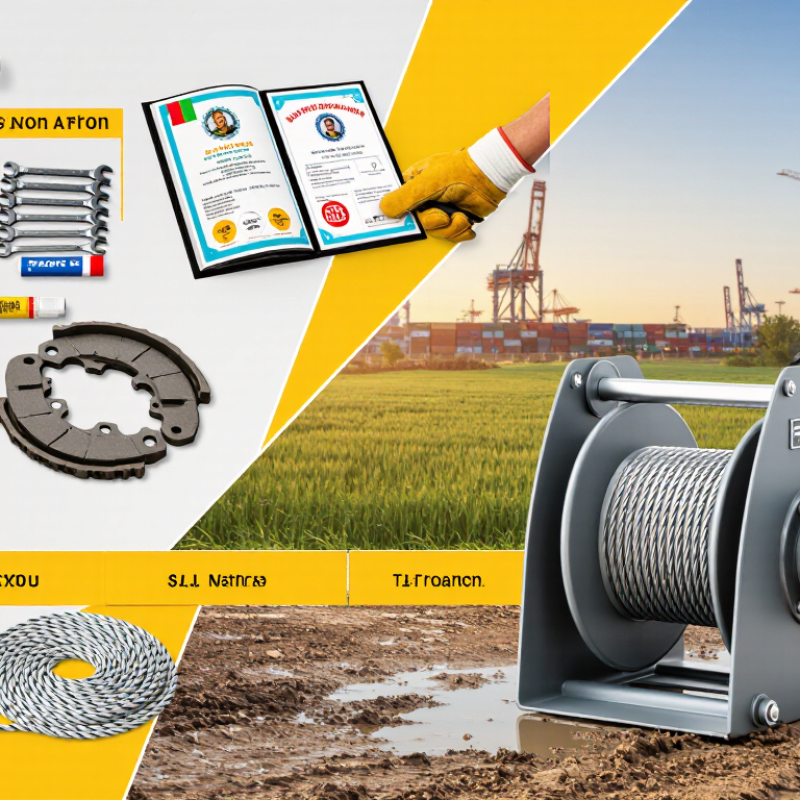
Choosing the 2026 best Tirfor Manual winch requires more than comparing pulling capacity or online prices. Global buyers must examine rated load, rope diameter, handle length, brake performance, spare-part access, and supplier support. A winch that looks compact on a screen may feel heavy and awkward beside a muddy recovery vehicle. Small details matter.
Alexandre Léon, founder of Tractel, is associated with a practical equipment principle: “Respect the load, and the machine will serve you.” That idea still guides responsible Tirfor Manual selection. Buyers should verify the working load limit, not confuse it with breaking strength. They should also inspect certification documents, operating instructions, and maintenance requirements before purchase. Product claims deserve careful checking.
Real experience often exposes weaknesses that brochures hide. A smooth pulling action matters when workers stand on uneven ground. A clear rope-release mechanism matters when gloves are wet. Corrosion protection matters near ports, farms, and construction sites. Yet no single model is ideal for every country, climate, or application.
This guide compares leading Tirfor Manual options for international buyers in 2026. It considers portability, durability, control, serviceability, and total ownership cost. It also acknowledges an uncomfortable truth: the cheapest winch may become the most expensive after one damaged rope or delayed replacement part. Buyers should pause, measure the task, and question impressive specifications. Careful selection is not glamorous. It is safer, wiser, and usually cheaper.
What Is a Tirfor Manual Winch and How Does It Work?
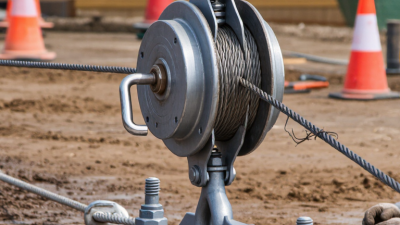
A Tirfor manual winch is a portable pulling device for lifting, tensioning, and positioning heavy loads. It uses a high-strength wire rope, internal gripping jaws, and a removable operating lever. Unlike a powered winch, it needs no engine, battery, or electrical supply. This makes it useful on remote construction sites, farms, workshops, and maintenance areas.
The operator anchors the winch to a stable point, then feeds the wire rope through its body. Moving the lever backward and forward activates the internal jaws. One jaw grips the rope while the other advances it through the mechanism. Each stroke creates controlled movement. The load moves gradually, often with a noticeable metallic click. Its rated capacity matters greatly. A suitable anchor, correct rope diameter, and straight pulling direction are equally important.
A manual winch is not a shortcut for poor planning. Operators should inspect the rope, hooks, pins, and housing before use. Damaged strands, slipping jaws, or unusual resistance require immediate attention. Keep hands away from rope entry points and never stand inside the possible recoil path. One honest concern remains: capacity charts can appear simple, but real loads are not. Friction, uneven ground, and shifting weight may increase the required force. Choosing a model only by maximum capacity can therefore be a costly mistake.
Choosing a manual winch starts with rated capacity, not appearance. Compare working load, maximum pulling force, and the required safety margin. A 1.6-ton model may suit equipment positioning, but not every lifting task. Check whether the rating applies to pulling, lifting, or both.
Rope diameter and length affect compatibility and field performance. Confirm the recommended wire rope size before ordering replacement cable. Longer ropes improve reach, but they add weight and may reduce handling speed. Line speed matters too. A practical model should move steadily without demanding excessive handle force. Handle length is important near walls, vehicles, or narrow access points.
During site checks, inspect the body, jaws, hooks, pins, and rope condition. Look for clear load markings and a traceable test certificate. A lighter frame is easier to carry across uneven ground. However, very low weight can suggest thinner components. I once selected a compact unit that was convenient, but its short rope limited real use. That mistake changed my comparison method. I now test portability, grip comfort, release control, and performance under a measured trial load. Surface coating, corrosion resistance, spare-part access, and maintenance instructions also deserve attention. Specifications can look impressive. Field details usually decide reliability.
Choosing the right Tirfor-style manual winch starts with the load, not the catalogue photograph. Confirm the working load limit, line pull, rope diameter, and required travel distance. A 1.6-ton rating may not suit a suspended load, angled pull, or rough ground. Account for friction and shock loading. These details are often underestimated.
Wire-rope condition matters greatly. Look for corrosion resistance, positive rope locking, smooth handle movement, and a clearly marked capacity plate. EN 13157 and relevant national lifting-equipment rules provide useful benchmarks, but local inspection requirements still differ.
The U.S. Bureau of Labor Statistics recorded 1,069 fatal injuries in transportation and material-moving occupations during 2023. That figure reinforces the need for controlled operations, trained users, and verified anchor points.
Field conditions should guide the final choice. For outdoor work, select suitable protection against rain, dust, and temperature changes. Check whether replacement rope, overload protection, and service support are available near the jobsite. A compact winch is easier to carry. It may still be unsuitable for continuous pulling. I have seen buyers focus on maximum capacity and overlook rope length, anchorage strength, and operator access. That is a costly assumption. Recheck the load path before purchase, especially when equipment will cross borders or serve several industries.
When selecting a manual Tirfor winch in 2026, global buyers should verify safety evidence before comparing price or pulling capacity. Look for clear compliance with applicable standards, such as EN 13157 or relevant national machinery requirements. Requirements differ by destination. A CE mark, when applicable, should support a valid Declaration of Conformity and technical documentation. For other markets, request independent test reports and traceable load-test records.
Check the rated capacity, wire-rope diameter, hook design, and overload warnings. The working load limit must match the complete lifting arrangement, not only the winch body. Inspect the rope for crushed strands, rust, kinks, or bird-caging before every use. Confirm that hooks have functioning safety latches. Keep hands away from the rope entrance and never stand beneath a suspended load. Stop immediately.
Responsible operation also depends on training and site discipline. Anchor the winch to a verified point that can withstand the expected force. Pull in a straight line whenever possible. Uneven ground, sudden shock loading, and improvised extensions can create dangerous side forces. Store the equipment dry, clean, and protected from contamination. Maintenance records should include inspection dates, defects, repairs, and the inspector’s name. A certificate can look reassuring, but paperwork alone cannot prove safe condition. Even experienced operators may miss internal wear, so independent examination remains worthwhile. һөкүмити
| Evaluation Dimension | Recommended Requirement for Global Buyers | Typical Data or Acceptance Criteria | Evidence to Request | Responsible Operating Practice |
|---|---|---|---|---|
| Rated line pull | Select a rated capacity suitable for the actual load and pulling arrangement. | Common manual wire-rope winch capacities are approximately 800 kg, 1,600 kg, 3,200 kg, and 5,400 kg, depending on the model and rope arrangement. | Load chart, technical data sheet, serial-number traceability, and working-load-limit marking. | Never exceed the lowest rated component in the complete system, including anchors, shackles, slings, and wire rope. |
| Working load limit calculation | Account for rolling resistance, incline, acceleration, friction, shock loading, and possible snagging. | The working load limit is not automatically equal to the mass of the load. Lifting and suspended-load applications require a separate engineering and regulatory review. | A documented lift or pull plan and, where necessary, calculations by a competent person. | Use only for applications permitted by the product instructions; do not use a pulling winch to lift people. |
| Wire-rope compatibility | Use the specified rope construction, diameter, length, end fitting, and minimum breaking force. | Typical rope diameters for compact manual winches are about 8.3 mm, 11.5 mm, or 16.3 mm; the correct size is model-specific. | Rope certificate, material and construction details, rope diameter measurement, and end-fitting specification. | Do not substitute a larger or smaller rope unless the manufacturer or a qualified engineer approves it. |
| Applicable European machinery framework | For products placed on the European Union market, confirm the applicable machinery legislation and conformity route. | Regulation (EU) 2023/1230 replaces Directive 2006/42/EC from 20 January 2027; Directive 2006/42/EC remains relevant during the transition period subject to its conditions. | EU Declaration of Conformity, technical documentation reference, instructions, and required conformity marking. | Check the rules in force at the date and country of placing the product on the market. |
| United Kingdom market | Confirm compliance with the applicable UK machinery-safety requirements for the intended market route. | The Supply of Machinery (Safety) Regulations 2008, as amended, is a principal UK framework for machinery supplied in Great Britain. | UK Declaration of Conformity where applicable, instructions in English, and required marking documentation. | Verify whether CE marking, UKCA marking, or transitional arrangements apply to the shipment date and destination. |
| United States workplace requirements | Review the applicable OSHA rules and any site-specific lifting, rigging, and fall-protection requirements. | OSHA requirements can vary by application, including material handling, wire rope, slings, and construction activities. | Equipment manual, inspection records, capacity marking, training records, and site risk assessment. | Follow the stricter requirement where local law, employer rules, or the site lift plan imposes higher controls. |
| Relevant technical standards | Use standards that match the equipment type and task; no single standard automatically covers every manual winch. | EN 13157 addresses hand-powered cranes; ISO 2408 addresses steel wire ropes; ISO 4309 addresses care, maintenance, examination, and discard of crane wire ropes. | A standards matrix showing edition, scope, test method, and the exact product features covered. | Do not treat a standard reference as proof of certification unless an independent conformity document supports the claim. |
| Braking and load control | Require a positive load-holding or self-braking mechanism suitable for the declared application. | The brake must hold the rated load under the conditions specified by the manufacturer; exact test loads and procedures are model-specific. | Brake test procedure, test results, maintenance limits, and instructions for controlled release. | Test the brake before use without placing personnel in the danger zone; stop work if slippage or abnormal noise occurs. |
| Anchorage and rigging | The anchor must withstand the maximum calculated force in the actual direction of pull. | Anchor capacity depends on structure, edge distance, soil or substrate, pull angle, and connection hardware; it cannot be inferred from winch capacity alone. | Anchor design, rated hardware certificates, sling identification, and a competent-person inspection. | Keep the line aligned with the load path and prevent side loading, sharp bends, and contact with abrasive edges. |
| Pre-use inspection | Inspect before every shift, after relocation, and after any overload or shock event. | Check rope kinks, crushed sections, broken wires, corrosion, deformation, hooks, pins, casing, jaws, brake action, and identification markings. | Signed inspection checklist with date, equipment identification, findings, and corrective action. | Quarantine defective equipment immediately and prevent unauthorized return to service. |
| Periodic examination | Set examination intervals according to local law, duty cycle, environment, and manufacturer instructions. | There is no universal interval that is safe for every application; frequent outdoor, marine, corrosive, or heavy-duty use requires closer examination. | Competent-person examination report, repair history, rope replacement record, and proof-load documentation where required. | Keep a traceable equipment register from purchase through retirement. |
| Environmental suitability | Match materials, coatings, lubrication, and storage controls to the environment. | Salt spray, chemicals, mud, water ingress, extreme temperatures, and explosive atmospheres can change inspection and material requirements. | Operating-temperature range, corrosion-protection specification, lubrication instructions, and hazardous-area assessment if applicable. | Clean, dry, lubricate, and store the winch and rope according to the instructions; never use unapproved lubricants. |
| Operator competence | Operators should be trained in the equipment, rigging system, hazards, emergency actions, and local procedures. | Training should cover capacity limits, line-of-fire hazards, communication, inspection, brake operation, and failure response. | Training records, authorization list, toolbox-talk records, and task-specific risk assessment. | Use clear signals and appoint one person to direct the operation where visibility or communication is limited. |
| Exclusion zone and line of fire | Establish a controlled area around the rope, load, anchor, and potential recoil path. | Personnel should remain outside the direct line of pull and away from stored-energy zones; the required distance depends on the task and risk assessment. | Site layout, barricade plan, warning signage, and documented hazard assessment. | Never stand over, step across, or place hands near a tensioned wire rope. |
| Emergency and overload response | Define a stop-work procedure for overload, rope damage, brake slip, anchor movement, or loss of communication. | Any suspected overload or shock load requires immediate isolation and inspection before reuse. | Emergency plan, incident form, quarantine tag, and post-event inspection record. | Do not release stored tension or dismantle connections until the load path is made safe. |
| Documentation and multilingual support | Purchase only equipment supplied with complete, current, destination-market documentation. | Documentation should include operating limits, assembly, inspection, maintenance, rope replacement, warnings, and disposal information. | Manual in the required language, declaration documents, spare-parts list, warranty terms, and service contacts. | Ensure operators can understand the safety information; use approved translations rather than informal summaries. |
| Sustainable service life | Prefer repairable equipment with replaceable wear parts, traceable components, and accessible technical support. | Evaluate spare-parts availability, planned maintenance cost, corrosion protection, packaging, and end-of-life recycling options. | Parts catalogue, service intervals, material information, repair policy, and disposal guidance. | Retire equipment when discard criteria are reached; do not extend service life by removing identification or hiding damage. |
Note: Capacity ranges and rope diameters shown above are typical market values, not universal specifications. The manufacturer’s current instructions, the destination country’s laws, and a competent person’s risk assessment always take priority.
2026 Best Manual Wire-Rope Winch for Global Buyers?
Global buyers should evaluate a manual wire-rope winch as a complete ownership package, not only by rated pulling capacity. Ask for verified load charts, rope diameter requirements, handle length, net weight, and test documentation. The rated capacity must match the actual pull, angle, anchoring method, and duty cycle. A lower-priced unit can become expensive when replacement rope or custom fittings are unavailable. Small details matter.
Before ordering, confirm that the supplier can provide accurate commercial invoices, packing lists, origin data, and serial-number records. These documents support customs clearance and warranty tracking. Compare shipping terms carefully, because port charges, insurance, duties, and inland delivery may sit outside the quoted price. Wooden crates should resist moisture and rough handling. Still, packaging is sometimes treated as an afterthought. That assumption is risky. Check delivery time zones, damage-report procedures, and spare-part availability before payment.
Maintenance should be simple enough for technicians at the destination. Request a service schedule covering rope inspection, lubrication points, brake checks, cleaning, and storage. Keep the manual and inspection log with the equipment. After-sales support should include response times, troubleshooting diagrams, and access to compatible parts. A video call may solve a minor issue, but it cannot replace qualified inspection after overload or visible deformation. Buyers should verify local workplace requirements and train operators in their language. Some purchasing decisions still rely on catalog photos. They should not.
Indicative planning benchmarks for purchasing, international shipping, customs clearance, inland delivery, and initial after-sales response. Actual timelines vary by destination, order quantity, transport mode, and documentation quality.
How to use this chart: Allow approximately 10 business days for supplier confirmation and order preparation, followed by export documentation, ocean transportation, customs clearance, and inland delivery. Buyers should also confirm pre-use inspection requirements, wire-rope condition checks, lubrication procedures, spare-parts availability, and the expected after-sales response time before placing an order.