Flatbed trailers carry steel coils, timber, machinery, and oversized construction materials. Their value is practical: a sound deck, secure tie-down points, and predictable braking help protect both cargo and delivery schedules. The American Trucking Associations’ American Trucking Trends 2023 reports that trucks moved 72.6% of U.S. freight tonnage in 2022. That figure describes the United States, not China’s export market, but it shows how heavily freight systems depend on road transport. The World Bank’s 2023 Logistics Performance Index also highlights reliability and timely delivery as important logistics outcomes. Neither report ranks trailer suppliers. That distinction matters.
This guide introduces ten China-based suppliers for global buyers comparing Flatbed Trailer Supplies. It focuses on details buyers can verify: deck dimensions, axle configuration, payload ratings, steel specifications, weld quality, corrosion protection, and parts availability. Ask for drawings, inspection records, and clear warranty terms. A polished catalogue is not enough. No supplier is perfect, and a low quoted price may leave important questions unanswered. Buyers should confirm that the proposed trailer suits their tractor, routes, cargo, and destination-market requirements. Those checks take time. They can also reveal whether a supplier communicates clearly after the first sale. The profiles that follow are intended as a starting point for due diligence, not an independent certification or a guarantee of performance.
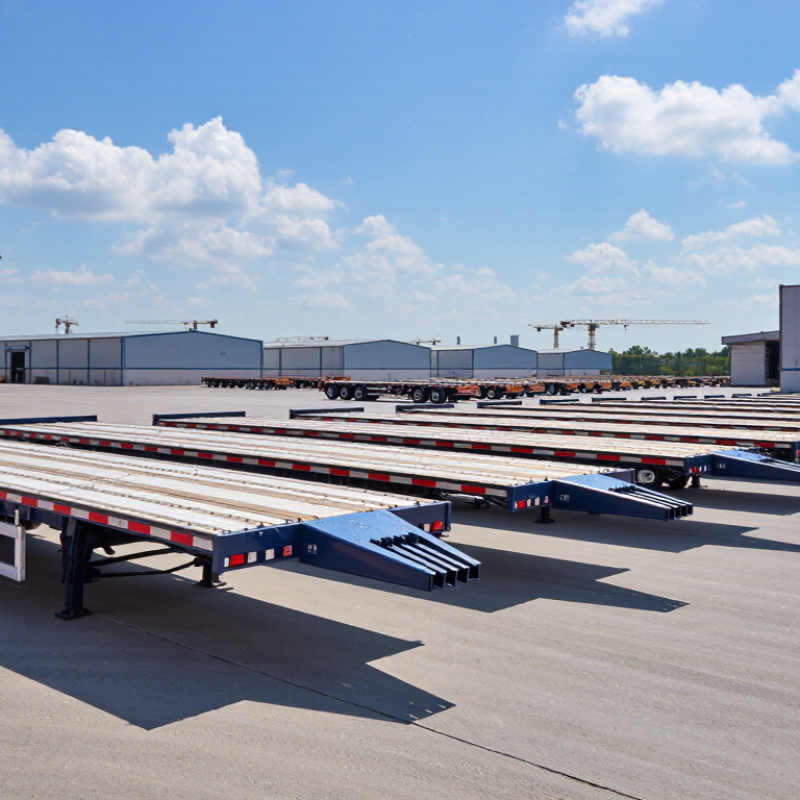
China’s flatbed trailer industry supports the movement of machinery, steel coils, timber, and containerized cargo between factories, depots, and ports. UNCTAD’s Review of Maritime Transport 2024 reports that over 80% of global merchandise trade by volume moves by sea. The inland leg still matters. Flatbeds help connect coastal terminals with industrial areas, where uneven roads and tight loading yards can shape daily operations.
WTO’s April 2025 Global Trade Outlook and Statistics reports that world merchandise trade volume grew 2.9% in 2024. That growth highlights ongoing demand for dependable inland freight equipment, though it does not guarantee demand for every trailer type. Buyers should assess payload, deck dimensions, axle configuration, and local road conditions together. A low deck alone is not enough. Specifications can look convincing on paper, while actual cargo and loading routines may tell a different story.
Tip: Ask suppliers for dimensional drawings, axle-load details, and photos of comparable builds. Check weld quality and surface protection in person when possible. Small details matter. Also clarify spare-parts availability and delivery timelines before ordering; export logistics can add friction, and that part is easy to underestimate.
A flatbed trailer may look simple, but small design choices affect years of use. Check the frame steel, crossmember spacing, and weld finish in person or through clear inspection photos. Uneven welds or rough edges deserve questions, not assumptions. Details matter. Ask for axle ratings, deck dimensions, tare weight, and payload figures, then compare them with your actual cargo and loading method. A stated payload is useful only when its calculation is clear. Request drawings and a written specification before confirming an order.
Production quality needs evidence. Ask how the supplier checks frame alignment, coating thickness, lighting, brakes, and other configured components before dispatch. A sample inspection report can reveal more than a polished catalogue. Confirm which tests are performed, who records the results, and whether serial numbers link documents to the trailer. Also review lead times, spare-part availability, warranty terms, and response arrangements for technical questions. No checklist catches everything. Even experienced buyers can miss details when schedules get tight, so leave time for a pre-shipment inspection. Communication is another practical test: clear answers about tolerances and changes are more reassuring than broad promises. Some uncertainty remains, and it is better to record it than ignore it.
Supplier-screening checklist: compare documented capabilities and confirm that specifications meet the requirements of your destination market.
| No. | Evaluation Criterion | What to Verify | Useful Evidence or Buyer Check |
|---|---|---|---|
| 1 | Product and load suitability | Confirm the trailer configuration, deck dimensions, rated payload, axle arrangement, and load distribution match the cargo and route. | Request a dimensioned drawing, axle-load information, and a written specification. Check permitted weights and dimensions with the destination-market authorities. |
| 2 | Design and technical documentation | Assess whether drawings, material specifications, component details, and operating instructions are complete and consistent with the offered build. | Compare the approved drawing and bill of materials with the quotation and final inspection documents; request revision control for design changes. |
| 3 | Materials and traceability | Check that structural materials and safety-critical components are specified for the intended loads and service conditions. | Ask for material certificates or supplier records where applicable, component specifications, and a method for tracing key parts to the finished trailer. |
| 4 | Welding and fabrication control | Evaluate welding procedures, operator qualifications, fabrication checks, and the inspection approach for structural joints. | Review relevant procedure and qualification records, inspection reports, and sample production quality records. Confirm any required testing is defined in the contract. |
| 5 | Axles, suspension, tires, and brakes | Verify component ratings and compatibility with the trailer design, intended operating conditions, and local road requirements. | Request component data sheets and applicable approvals. Confirm brake, lighting, tire, and coupling requirements for the destination country before ordering. |
| 6 | Quality management and inspection | Determine whether production controls, incoming checks, in-process inspections, and final inspections are documented and consistently applied. | Check the scope and validity of any claimed quality-management certificate with its issuer. Agree on inspection stages, acceptance criteria, and records before production. |
| 7 | Corrosion protection and finish | Compare surface preparation, coating system, coverage, and repair procedures with the climate and expected service environment. | Specify the coating process and inspection criteria in the purchase agreement; request coating records and photographs of prepared and finished surfaces. |
| 8 | Customization and communication | Assess the supplier's ability to clarify technical requirements, document agreed changes, and communicate in the buyer's working language. | Use a written specification and drawing-approval process. Record change requests, responsible contacts, and response expectations in the project plan. |
| 9 | Export readiness and delivery | Confirm experience with the relevant shipping method, export documentation, packaging or securing, and the agreed delivery terms. | Request a proposed shipping plan and document list. Clarify Incoterms® 2020, responsibilities, lead time, loading method, and who handles import approvals. |
| 10 | Warranty, spare parts, and after-sales support | Review warranty coverage, exclusions, claim procedures, spare-parts availability, and support arrangements after delivery. | Obtain the written warranty and parts list before purchase. Clarify claim documentation, shipping costs, response process, and any local service options. |
Note: This table is an evaluation framework, not a verified ranking of individual suppliers. Certification, road-approval, and technical requirements vary by product and destination market; verify applicable requirements independently.
A China-focused shortlist may include ten distinct flatbed trailer supplier profiles.
Details matter. Ask each supplier for material specifications, weld inspection records, axle data, and photographs of comparable builds. Check how deck height, coating, and spare-parts access fit your routes and maintenance plans.
These profiles are comparison starting points, not verified claims about individual factories. A polished brochure can still leave gaps. Request evidence, and confirm the final design in writing before production.
Even careful buyers may overlook small items, such as marker-light placement or tie-down spacing.
Choosing among China’s top flatbed trailer suppliers means comparing working details, not only quoted prices. Ask for deck length, axle layout, rated payload, ramp design, tie-down points, and corrosion protection. Request drawings and inspection records for the exact configuration; catalogue photos cannot show weld quality or loaded stability. The World Bank’s 2023 Logistics Performance Index assessed 139 countries across six dimensions, including infrastructure, tracking, and timeliness. These measures make delivery capability worth checking alongside trailer specifications.
For export service, ask who prepares shipping documents, how the trailer is secured for transport, and whether spare parts are available. Compare response times and written warranty terms, not vague promises. Small details matter: a missing ramp pin or delayed axle component can stall a delivery. A polished brochure proves little. I would also question unusually short lead times unless production capacity and inspection schedules are documented. Supplier comparisons are imperfect; specifications may use different assumptions about payload, road conditions, and included equipment. Request matching quotations, then verify each item before placing an order.
China Top 10 Flatbed Trailer Suppliers for Global Buyers
How Global Buyers Can Select a Suitable Chinese Supplier
Choosing a supplier takes more than comparing prices. Start with the trailer’s intended load, route conditions, and loading method. A unit carrying steel coils may need different deck features from one moving construction machinery. Share these details before requesting a quotation. Clear requirements make supplier responses easier to compare.
Review technical drawings, material specifications, and inspection records, not just catalog photos. Ask how the supplier checks welds, axle alignment, and deck dimensions. A short video showing the trailer during production can help, but it cannot replace independent inspection when the order is large. Check whether requested changes are documented in the final drawings. Small details matter.
Communication is part of the evaluation. Send the same questions to each shortlisted supplier and note how clearly they answer. Confirm production milestones, packaging, shipping documents, spare-parts support, and warranty terms in writing. Request references for comparable export orders, then verify them where practical. A polished brochure can still leave gaps. I would not treat a low quote as proof of poor quality, either; compare its scope carefully. The best fit is the supplier whose evidence, capabilities, and service match your operating needs.
Suggested priority scores for comparing suppliers. Scores are a practical buyer rubric, not market-survey data or supplier rankings.
Prioritize compliance with destination-market regulations, verified production quality, and clear warranty and after-sales support. Confirm specifications and documentation for your route and trailer configuration.