What is a Tirfor Cable Puller and How Does It Work?
The Tirfor Cable Puller is a versatile tool widely used in various industries. It is designed for heavy lifting and pulling tasks. This device operates using a simple mechanical design, allowing users to move significant loads with minimal effort.
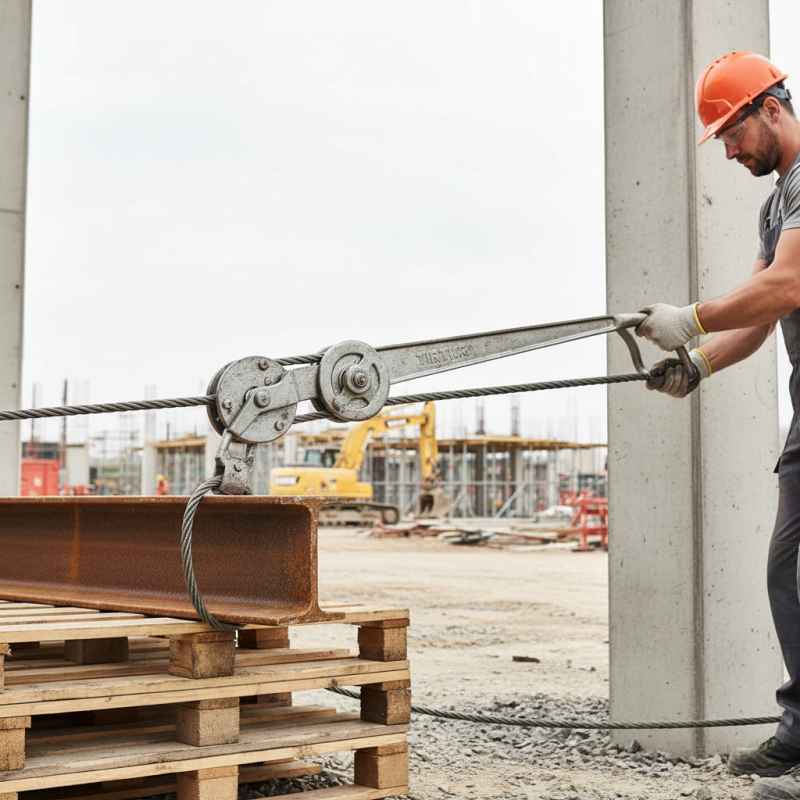
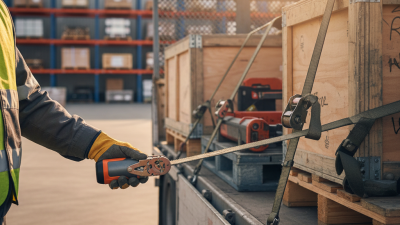
When using a Tirfor Cable Puller, operators connect the cable to the load. The handle is then operated to pull the cable, which lifts or moves the object. This mechanism is efficient and often reduces the need for heavy machinery. However, improper usage can lead to accidents or damage.
Understanding the key features of the Tirfor Cable Puller is essential. Knowledge about weight capacity, usage limits, and safety precautions can make a difference. Many users overlook these aspects, leading to potential risks. Learning the proper techniques and precautions is crucial for effective use.
What is a Tirfor Cable Puller?
A Tirfor cable puller is a versatile tool widely used in construction and engineering. It provides a powerful mechanical advantage for moving heavy loads. These devices use a simple ratchet mechanism, which allows them to pull or lift loads efficiently. According to industry data, the global market for cable pullers is projected to grow significantly, reflecting the increasing demand in various sectors.
The principle of a Tirfor cable puller is based on friction and mechanical advantage. It typically consists of a cable, a frame, and a ratchet mechanism. Operators can control the tension and direction of the pull with ease. However, operators must be trained to use these devices properly to prevent accidents. Misuse can lead to malfunctions or equipment failure. The safety factor is crucial when selecting a Tirfor cable puller, as different models support varying load capacities.
Despite their efficiency, Tirfor cable pullers do have limitations. They require physical strength and proper technique for effective operation. Improper handling can cause damage to both the device and the load. Operators should regularly inspect equipment for wear and tear, and follow all guidelines for safe usage. Industry reports indicate that user errors account for a significant percentage of accidents. Proper training and regular maintenance are key to ensuring safety and effectiveness in utilizing a Tirfor cable puller.
Key Components of a Tirfor Cable Puller
A Tirfor cable puller is a versatile tool used for various lifting and pulling tasks. Understanding its key components is essential for efficient operation. The puller consists of a robust cable, a ratchet mechanism, and a housing unit. These components work together to provide significant pulling power, making it suitable for construction and industrial applications.
The cable is typically made of high-tensile steel. This ensures durability and strength. Reports indicate that steel cables can withstand forces exceeding 1,500 pounds without breaking. The ratchet mechanism allows for easy operation and control, enabling users to adjust the tension as needed. However, improper handling may lead to accidents. Safety should always be a priority.
Another critical part is the housing. It protects the internal mechanisms from wear and tear. Regular inspection is necessary. According to industry surveys, nearly 30% of cable puller malfunctions occur due to inadequate maintenance. Maintaining a clean and lubricated housing can prolong the tool’s lifespan. Understanding these components helps in making informed decisions when selecting and using a Tirfor cable puller.
What is a Tirfor Cable Puller and How Does It Work? - Key Components of a Tirfor Cable Puller
| Component |
Description |
Function |
| Pulling Handle |
The lever used to operate the cable puller. |
Provides manual force to engage the winching mechanism. |
| Winch Mechanism |
The internal system that pulls the cable. |
Converts the pulling force into linear motion to pull objects. |
| Cable |
Steel wire rope that transmits pulling force. |
Lifts and moves heavy loads with minimal effort. |
| Frame |
The structural casing that houses the winching mechanism. |
Provides support and stability during operation. |
| Safety Mechanism |
Includes features to prevent accidental release. |
Ensures user safety during operation and handling. |
| Gears |
Mechanical parts that assist in the pulling power. |
Increase torque to efficiently lift heavy loads. |
How to Use a Tirfor Cable Puller Effectively
A Tirfor cable puller is a versatile tool often used in construction and heavy lifting tasks. To use it effectively, one should start by assessing the load's weight. According to industry reports, understanding the load's weight is crucial, as using a Tirfor rated for too little weight can lead to failure. A puller must be matched with the appropriate wire rope. Using a rope that’s too thin may lead to breakage under heavy strain.
Preparation is key. Ensure that the work area is clear and safe. The Tirfor cable puller must be anchored securely to a stable point. Using it on unstable ground can cause accidents. When operating, pull steadily rather than jerking the handle. The shear forces generated can damage the puller and the load. It's important to maintain a focus on safety, as 20% of accident reports involve improper user technique.
Regular maintenance can extend the life of your Tirfor cable puller. Inspect cables for wear and ensure that all moving parts are functioning correctly. Missing this step can lead to decreased performance and potential safety hazards. While the puller is designed for heavy jobs, it requires vigilance and care in its use. A small oversight can lead to significant problems later on.
Safety Precautions When Using a Tirfor Cable Puller
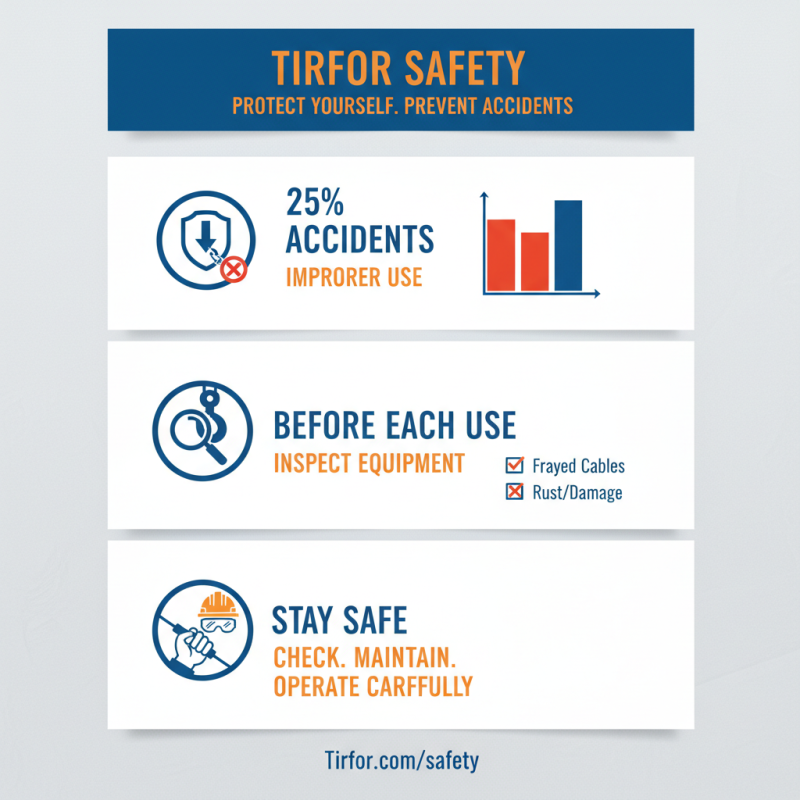
Using a Tirfor cable puller can be efficient, but safety is crucial. According to industry reports, improper use accounts for up to 25% of workplace accidents involving cable pullers. Always inspect the equipment before each use. Check for signs of wear, such as frayed cables or rust. These conditions can lead to failures that put users at risk.
Wear appropriate personal protective equipment (PPE), including gloves and safety goggles. The cable can snap if overloaded, which may cause severe injuries. It's also vital to maintain a clear area around the puller. This prevents accidental trips and ensures everyone can keep a safe distance from the operation. Did you know that over 15% of operators fail to enforce safety zones? This negligence can lead to avoidable accidents.
Understanding load limits is essential. Many users overestimate their capacity to pull. This can lead to slipping or snapping. It’s crucial to calculate the exact weight you are moving. Reports show that overloading equipment is a common mistake in 30% of cases. Be mindful of safety, and always adhere to operational guidelines to mitigate risks.
Common Applications of Tirfor Cable Pullers in Various Industries
Tirfor cable pullers are versatile tools widely used across various industries. They excel at lifting and pulling heavy loads in construction. Workers use these pullers to move large beams or relocate heavy machinery. Their compact design allows for easy transport and deployment on job sites.
In the forestry sector, Tirfor cable pullers help in tree felling and transportation of logs. They can efficiently guide logs to desired locations, reducing manual effort. In emergency situations, they assist in recovering vehicles stuck in difficult terrains. Despite their strength, users need to be cautious. Improper use can lead to serious accidents.
Tirfor pullers are also found in marine settings. Salvage operations often rely on them for moving heavy equipment onto boats. However, are workers adequately trained in their operation? Often, safety protocols may not be fully followed. This can lead to unwanted complications. Awareness and training are crucial for maximizing safety and efficiency.