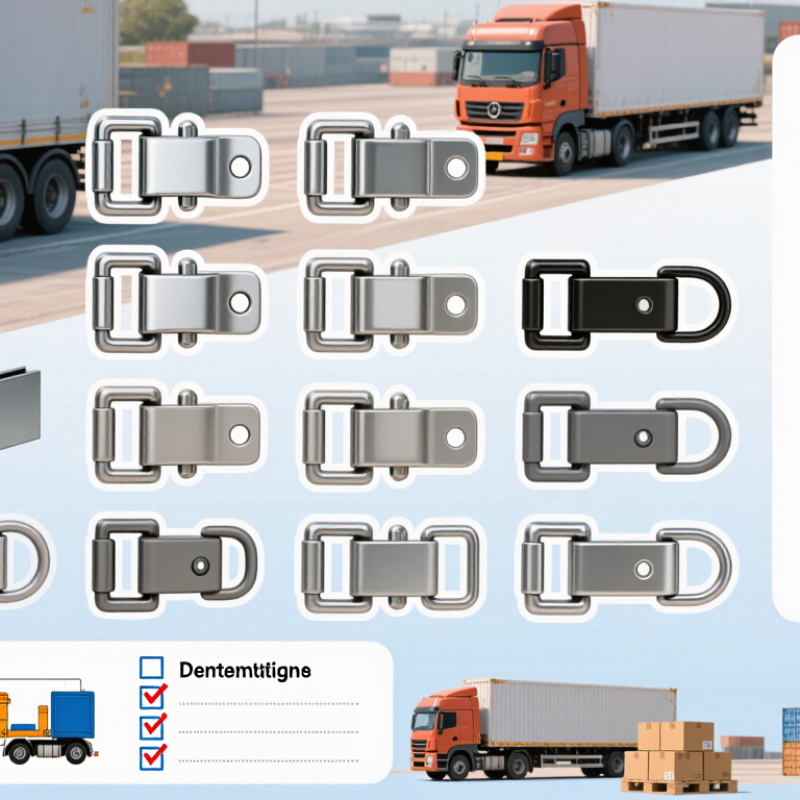
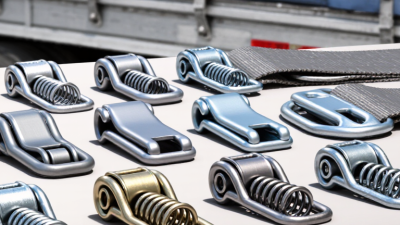
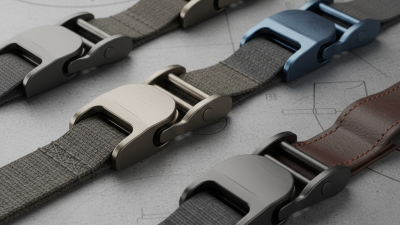
| Load Restraint Function |
Securing a side curtain to maintain tension and help prevent curtain movement during transport. |
Use a ratchet-style buckle with controlled take-up, a secure locking mechanism, and a handle that can be operated while wearing work gloves. |
General road freight, palletized goods, packaged materials, and mixed cargo. |
Confirm that the buckle is part of the complete load-restraint system. It should not be treated as a replacement for rated straps, side boards, blocking, or other required restraints. |
| Required Working Load |
Determine the required working load limit from the vehicle design, curtain system, webbing, attachment points, and applicable transport rules. |
Select a buckle whose rated capacity is equal to or higher than the weakest connected component. Use the manufacturer’s declared working load limit rather than appearance or material thickness alone. |
Loads exposed to braking, cornering, vibration, wind pressure, and repeated loading cycles. |
Request documented rated capacity, test method, safety factor, and component traceability. Do not compare breaking force and working load limit as if they were the same value. |
| Webbing Compatibility |
Common webbing widths include approximately 25 mm, 38 mm, 50 mm, and 75 mm, depending on the curtain system. |
Match the buckle slot, mandrel, and webbing contact surfaces to the actual strap width and thickness. The webbing should sit flat without twisting or excessive edge pressure. |
Replacement buckles, new curtain assemblies, and fleet standardization programs. |
Specify metric dimensions, acceptable tolerances, webbing material, thickness range, and the required insertion and release method. |
| Curtain Material |
Common curtain constructions use coated polyester or PVC-coated textile fabrics, sometimes with reinforced edges, pockets, or integrated straps. |
Choose a buckle that provides sufficient tension without cutting, crushing, or abrading the curtain hem, pocket, or attached webbing. |
Standard curtains, reinforced curtains, insulated curtains, and curtains with printed surfaces. |
Inspect contact areas for burrs and sharp edges. Confirm that buckle geometry is compatible with the curtain’s edge treatment and reinforcement layout. |
| Curtain Type: Standard |
Flexible side curtains used for general cargo protection from weather, dust, and visual exposure. |
Medium-duty buckle with smooth webbing paths, reliable tension retention, and simple manual release. |
Dry freight, packaged consumer goods, building products, and routine regional distribution. |
Prioritize interchangeability with existing strap systems and ease of replacement in the destination market. |
| Curtain Type: Heavy-Duty |
Reinforced curtains used where frequent opening, higher tension, or demanding cargo-handling conditions are expected. |
Heavy-duty steel or corrosion-resistant alloy construction, reinforced pivot areas, robust mandrel, and high-cycle durability. |
High-frequency distribution, construction materials, dense palletized cargo, and intensive fleet operations. |
Request cycle-test results, deformation limits, coating details, and evidence that the buckle remains operable after repeated loading. |
| Curtain Type: Insulated or Temperature-Controlled |
Multi-layer curtains may be thicker and less flexible than standard curtains. |
Use a buckle with sufficient clearance and take-up range for the curtain thickness. Avoid excessive compression that can damage insulation layers. |
Temperature-sensitive goods, short-distance cold-chain transfers, and multi-temperature trailers. |
Check performance at the intended temperature range. Cold conditions can reduce textile flexibility and increase the force needed to tension or release the buckle. |
| Curtain Type: Sliding or Quick-Open |
Curtains are opened frequently by sliding along the trailer side or releasing multiple tension points. |
Compact buckle with fast release, low snag risk, easy visual inspection, and minimal interference with rollers, tracks, or curtain hardware. |
Cross-docking, parcel distribution, retail delivery, and operations with many daily stops. |
Assess operator hand clearance, release time, noise, snagging risk, and compatibility with the complete opening sequence. |
| Operating Frequency |
Low-frequency operations may open the curtain occasionally; high-frequency fleets may cycle buckles many times per day. |
For frequent cycling, select a design with wear-resistant pivot points, stable spring action, replaceable components where practical, and consistent release force. |
Long-haul freight, distribution fleets, rental trailers, and multi-shift logistics operations. |
Define expected cycles per day, service life target, maintenance interval, and the inspection criteria for wear, deformation, and corrosion. |
| Manual Ergonomics |
Operators may work outdoors, in poor weather, and while wearing protective gloves. |
Provide a rounded handle, adequate grip area, controlled operating force, and no exposed edges that can cause hand injuries or snag clothing. |
Daily loading and unloading, roadside operations, and warehouse environments. |
Include operator trials in the sourcing process. Check access when the buckle is positioned close to the chassis, curtain rail, or cargo. |
| Corrosion Exposure |
Rain, road salt, humidity, cleaning chemicals, and coastal air can accelerate corrosion. |
Use suitable plated steel, stainless steel, or corrosion-resistant alloy according to the exposure level. Protect springs, pins, and hidden contact areas. |
Winter road service, coastal transport, frequent wash-down, and outdoor storage. |
Specify coating type, coating thickness where relevant, salt-spray test conditions, and acceptance criteria. Check for coating damage after assembly. |
| Temperature Range |
Vehicles may operate in hot sunlight, freezing weather, or rapid temperature changes. |
Select materials and lubricants that retain strength, spring performance, and acceptable operating force across the intended temperature range. |
International road transport, refrigerated logistics, northern climates, and desert environments. |
State the minimum and maximum operating temperatures. Confirm that plastics, elastomers, coatings, and lubricants are suitable for the complete range. |
| Wind and Aerodynamic Exposure |
Side curtains can experience fluctuating wind loads, especially when the trailer is moving or parked in exposed areas. |
Use reliable locking and tension retention. The buckle should not loosen from vibration or allow the handle to move into a snagging position. |
High-speed highway transport, exposed yards, and routes with strong crosswinds. |
Evaluate the buckle together with curtain tensioners, straps, rails, and lower supports. Confirm that the complete system has adequate restraint performance. |
| Vibration and Shock |
Road vibration and impact can produce repeated movement at the buckle, webbing, curtain edge, and mounting points. |
Choose a design with positive locking, secure pivots, low play, and surfaces that minimize webbing abrasion under repeated movement. |
Rough roads, construction access routes, unpaved yards, and high-mileage fleets. |
Ask for vibration or endurance test data where available. Inspect samples after testing for loosening, cracks, deformation, and strap damage. |
| Mounting Arrangement |
Buckles may be mounted to a fixed rail, lower side member, tension strap, or curtain assembly depending on the trailer design. |
Match the mounting hole pattern, pin diameter, orientation, clearance, and articulation range to the existing hardware. |
Original equipment production, retrofit programs, and replacement-part sourcing. |
Provide drawings or physical samples. Verify mounting dimensions, fastener compatibility, access for tools, and clearance from wheels and cargo. |
| Material Selection |
Common choices include carbon steel, stainless steel, zinc-based castings, and engineered polymers for selected components. |
Select material according to load, wear, corrosion, temperature, and cost requirements. Avoid specifying material by name without defining the required performance. |
Standard commercial vehicles through severe-duty applications. |
Request material certificates, heat-treatment details where applicable, hardness range, coating specification, and restricted-substance declarations. |
| Safety and Locking |
The buckle must remain secured during transport but be intentionally releasable by an operator. |
Use a positive locking feature, controlled release action, and a design that provides a clear visual indication of the secured position. |
Public-road transport and loads requiring documented restraint procedures. |
Verify compliance with the buyer’s transport regulations and fleet safety procedures. Do not rely on a friction-only closure where positive locking is required. |
| Quality Control |
Critical checks include dimensions, material, coating, operating force, locking function, and load performance. |
Use defined inspection points and sample testing for each production batch. Maintain consistency in slot width, pivot fit, handle geometry, and locking action. |
Large-volume purchasing, safety-critical replacement parts, and multi-country distribution. |
Agree on an inspection plan, acceptable quality limits, sampling level, product identification, and nonconformance handling before mass production. |
| Packaging and Shipping |
Metal buckles can damage curtains, webbing, or other components if they move freely during transport. |
Use separators, protective wrapping, corrosion protection, and packaging that prevents impact damage and coating abrasion. |
Sea freight, long-distance trucking, containerized shipments, and warehouse storage. |
Check packaging strength, moisture protection, carton labeling, quantity accuracy, and whether packaging is suitable for the destination’s handling conditions. |
| Maintenance and Replacement |
Buckles should be inspected for bent parts, cracks, corrosion, loose pivots, damaged webbing, and incomplete locking. |
Prefer designs that are easy to clean, visually inspect, lubricate when permitted, and replace without removing major curtain components. |
Fleet maintenance programs and roadside service operations. |
Request installation instructions, inspection guidance, spare-part availability, recommended replacement intervals, and disposal information. |
| Documentation for Sourcing |
Technical purchasing requires clear, comparable information rather than a product description alone. |
Prepare a specification covering dimensions, working load, webbing compatibility, materials, finish, operating range, testing, packaging, and acceptance criteria. |
International RFQs, supplier comparison, private-label production without brand references, and recurring orders. |
Use neutral technical drawings and measurable requirements. Require sample approval before production and retain a reference sample for future inspections. |