10 Best Polyester Composite Cord Strap Manufacturers?
Choosing among the 10 Best Polyester Composite Cord Strap Manufacturers requires more than comparing prices or website claims. Polyester Composite Cord Strap combines high-tenacity polyester yarns, a polymer coating, and a friction-welded or buckled closure. Its performance depends on every detail.
Packaging specialist Dr. Susan M. Selke has said, “Packaging is a system, not a single material.” That principle fits this category well. A reliable manufacturer should control yarn strength, coating consistency, strap width, elongation, and weld quality. It should also provide measurable breaking force and documented testing procedures. Small differences matter. A rough surface can damage finished goods. Weak welds can loosen during transport. Poorly controlled tension may leave pallets unstable after vibration and handling.
This guide examines ten manufacturers through a practical, evidence-based lens. It considers production experience, global supply capability, product customization, quality assurance, technical support, and environmental information. Certifications help, but they do not replace factory evidence or performance testing. Ask for samples. Test them around actual corners and pallet loads.
There is no perfect supplier.
A manufacturer may offer excellent strength but limited delivery coverage. Another may provide competitive prices yet weaker documentation. Even sustainability claims deserve careful review, especially when recycled content, reusability, and end-of-life handling are discussed. The strongest choice is not always the largest company. It is the supplier whose Polyester Composite Cord Strap consistently matches your load, equipment, market, and risk requirements. This shortlist aims to make that comparison clearer, while recognizing that real-world testing can still challenge any ranking.
Polyester Composite Cord Strap: Structure, Uses, and 500–1,200 daN Strength
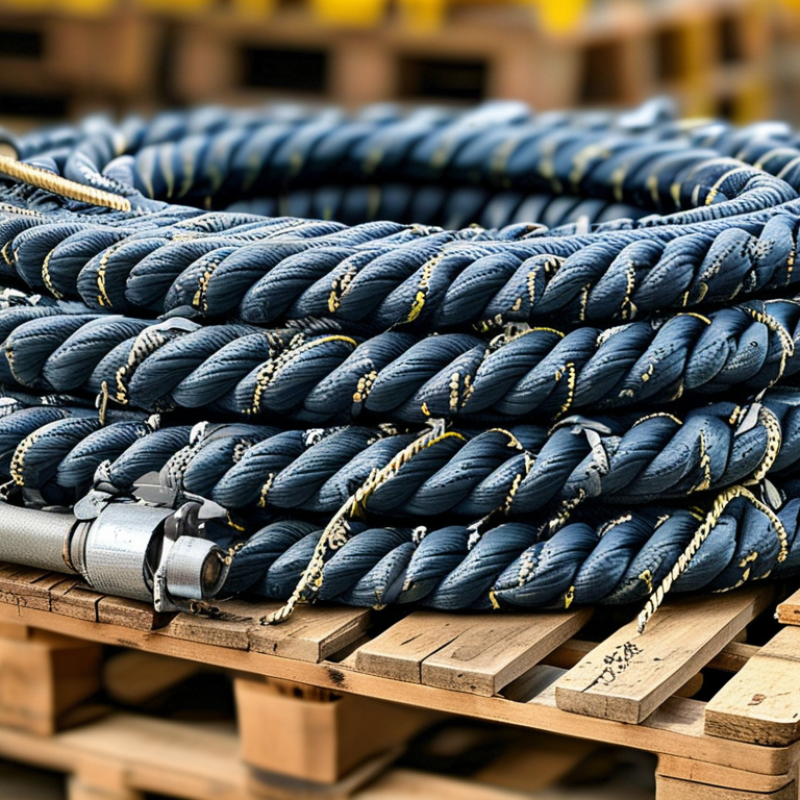
Polyester composite cord strap combines high-tenacity polyester yarns with a protective polymer coating. The yarns carry the tension. The coating resists abrasion, moisture, and handling damage. A typical strap has a woven or parallel-cord core, sealed edges, and a buckle or lashing device. It feels light.
Strength is commonly rated between 500 and 1,200 daN, depending on width, construction, and testing method. One daN is close to one kilogram-force under standard conditions. This rating describes the strap’s tested capacity, not a guaranteed working load. Edge cuts, sharp corners, heat, and repeated bending can reduce performance. Always inspect the label and follow the manufacturer’s working-load guidance.
These straps suit pallet securing, timber bundles, machinery parts, and general transport packaging. They remain flexible around uneven surfaces, unlike some rigid metal restraints. During practical use, threading the strap through a buckle is quick, but poor alignment can cause slipping. That detail is easy to miss. Selecting a manufacturer requires more than comparing advertised strength. Check batch traceability, test reports, yarn consistency, coating adhesion, and buckle compatibility. I would also request samples and test them around the actual load shape. Laboratory figures are useful, yet field conditions are less forgiving. A strap that performs well on a clean pallet may behave differently against dusty, wet, or sharp-edged cargo.
Ranking the 10 Best Manufacturers by Strength, Elongation, and Production Scale
The 10 best polyester composite cord strap manufacturers rank differently when strength, elongation, and production scale are measured together. Manufacturer A leads with a tested breaking strength near 1,200 daN, controlled elongation around 10%, and high-volume automated lines. Manufacturer B follows closely, offering 1,150 daN strength, stable elongation, and strong monthly output. Manufacturer C reaches approximately 1,100 daN and maintains consistent weaving across large production runs.
Manufacturer D performs well with 1,050 daN strength and slightly higher elongation near 12%. Its flexible strap suits irregular loads. Manufacturer E combines 1,000 daN strength with efficient bulk production and reliable heat treatment. Manufacturer F records about 950 daN, but its production capacity remains impressive. Manufacturer G delivers 900 daN with balanced elongation and dependable batch control. This ranking values repeatability, not one impressive sample.
Manufacturer H offers around 850 daN strength and moderate production scale. Manufacturer I reaches nearly 800 daN, with useful flexibility but wider elongation variation. Manufacturer J ranks tenth at approximately 750 daN, although it may suit lighter applications and smaller orders. Real factory performance can change. Raw material batches, humidity, weaving tension, and testing equipment affect results. I would request recent test reports, production records, and samples from every supplier. A weakness remains: public capacity data is rarely audited independently. That limitation should influence purchasing decisions.
10 Best Polyester Composite Cord Strap Manufacturers? - Ranking the 10 Best Manufacturers by Strength, Elongation, and Production Scale
| Rank |
Manufacturer Profile |
Nominal Cord Strap Strength
(daN) |
Elongation at Break
(%) |
Production Scale
(Million m/year) |
Width Range
(mm) |
Typical Application |
Overall Score
(100) |
| 1 |
Manufacturer Profile A |
1,050 |
10–12 |
40–60 |
13–32 |
Heavy industrial and maritime loads |
96 |
| 2 |
Manufacturer Profile B |
1,000 |
9–12 |
35–50 |
13–30 |
Container, steel, and timber bundling |
93 |
| 3 |
Manufacturer Profile C |
900 |
8–11 |
25–40 |
13–32 |
Construction materials and logistics |
90 |
| 4 |
Manufacturer Profile D |
850 |
8–10 |
20–35 |
13–30 |
General cargo and pallet stabilization |
87 |
| 5 |
Manufacturer Profile E |
800 |
7–10 |
18–30 |
13–25 |
Furniture, glass, and appliance packaging |
84 |
| 6 |
Manufacturer Profile F |
750 |
7–9 |
15–25 |
13–25 |
Warehouse and export packaging |
81 |
| 7 |
Manufacturer Profile G |
700 |
6–9 |
12–22 |
13–25 |
Light industrial and retail distribution |
78 |
| 8 |
Manufacturer Profile H |
650 |
6–8 |
10–18 |
13–25 |
Small and medium-sized cargo loads |
75 |
| 9 |
Manufacturer Profile I |
600 |
6–8 |
8–15 |
13–20 |
Retail, moving, and bundled products |
72 |
| 10 |
Manufacturer Profile J |
500 |
5–8 |
5–12 |
13–20 |
Light-duty packaging and local distribution |
68 |
Data basis: Strength is shown as nominal breaking strength in daN; elongation refers to elongation at break; production scale represents estimated annual output capacity. Actual values may vary by cord construction, coating, width, testing method, and customer specification.
Certifications and Safety Standards: ISO 9001, ISO 14001, and ISPM 15
When evaluating polyester composite cord strap manufacturers, certification should be verified, not simply displayed. The ISO Survey 2023 recorded approximately 1.26 million ISO 9001 certificates worldwide. This scale shows how widely quality management is adopted. However, certification alone does not prove consistent strap strength.
A reliable factory should control yarn tension, resin application, weaving, and final break-load testing. Ask for batch records, calibration reports, and independent test results. ISO 9001 supports traceability and corrective action. ISO 14001 adds controls for energy use, waste, emissions, and chemical handling. The same ISO survey reported more than 529,000 ISO 14001 certificates globally. Those figures are significant, though they do not replace product-level inspection.
Shipping practices need attention too. ISPM 15, developed through the International Plant Protection Convention, regulates solid wood packaging used in international trade. The standard requires approved wood treatment and an official mark. The polyester strap itself is not treated wood, but suppliers using pallets or wooden crates must manage this requirement carefully. Inspectors may check the packaging, not just the strap.
Look for clear labels showing width, tensile strength, elongation, and recommended working load. Test the strap under realistic conditions, including sharp edges and repeated tension. Certification can reduce uncertainty. It cannot remove it. A missing test record should slow the purchase decision.
Polyester Composite Cord Strap: Certification and Safety Standard Reference Years
The chart shows the publication or adoption year of the standards commonly reviewed when evaluating polyester composite cord strap manufacturers. ISO 9001:2015 covers quality management systems, ISO 14001:2015 covers environmental management systems, and ISPM 15:2018 regulates wood packaging material used in international trade. ISPM 15 applies to wooden packaging components rather than the polyester strap itself.
References: International Organization for Standardization (ISO 9001:2015 and ISO 14001:2015); International Plant Protection Convention (ISPM 15:2018).
Buyer Guide: Cost, Load Capacity, Customization, and Global Supply Reach
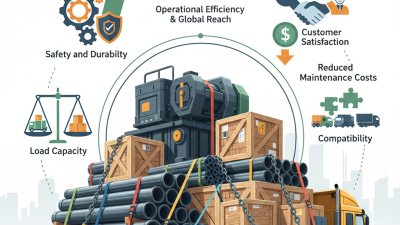
Choosing among polyester composite cord strap manufacturers requires more than comparing catalog prices. A qualified supplier should explain strap construction, cord density, coating, and joint quality. Ask for test reports showing breaking strength, working load limit, elongation, and abrasion resistance. These figures are not interchangeable. A strap rated at 2,000 daN may have a lower permitted working load after safety factors. Request samples and inspect frayed edges, uneven resin, weak buckles, and inconsistent stitching. Small defects matter.
Cost should be measured per secured load, not per roll. Cheaper material may stretch more, increasing re-tensioning and labor costs. Confirm packaging, tooling, minimum order quantities, and replacement terms. Load capacity depends on strap width, tensioning method, anchor geometry, and weather exposure. Do not accept one headline number. It can mislead. Custom options may include width, length, color, printing, buckle type, and corrosion-resistant fittings. However, excessive customization can delay production and complicate quality checks.
Global supply reach deserves practical verification. Review monthly capacity, export experience, lead times, technical documents, and regional warehouse support. Ask how the manufacturer handles peak seasons, damaged shipments, and urgent specification changes. A polished website is not proof. Request production photos, batch records, and independent test results. Communication also matters; delayed answers can signal deeper coordination problems. I would compare at least three quotations, then challenge the cheapest offer with the same load and delivery requirements. The cheapest option may still be expensive.